
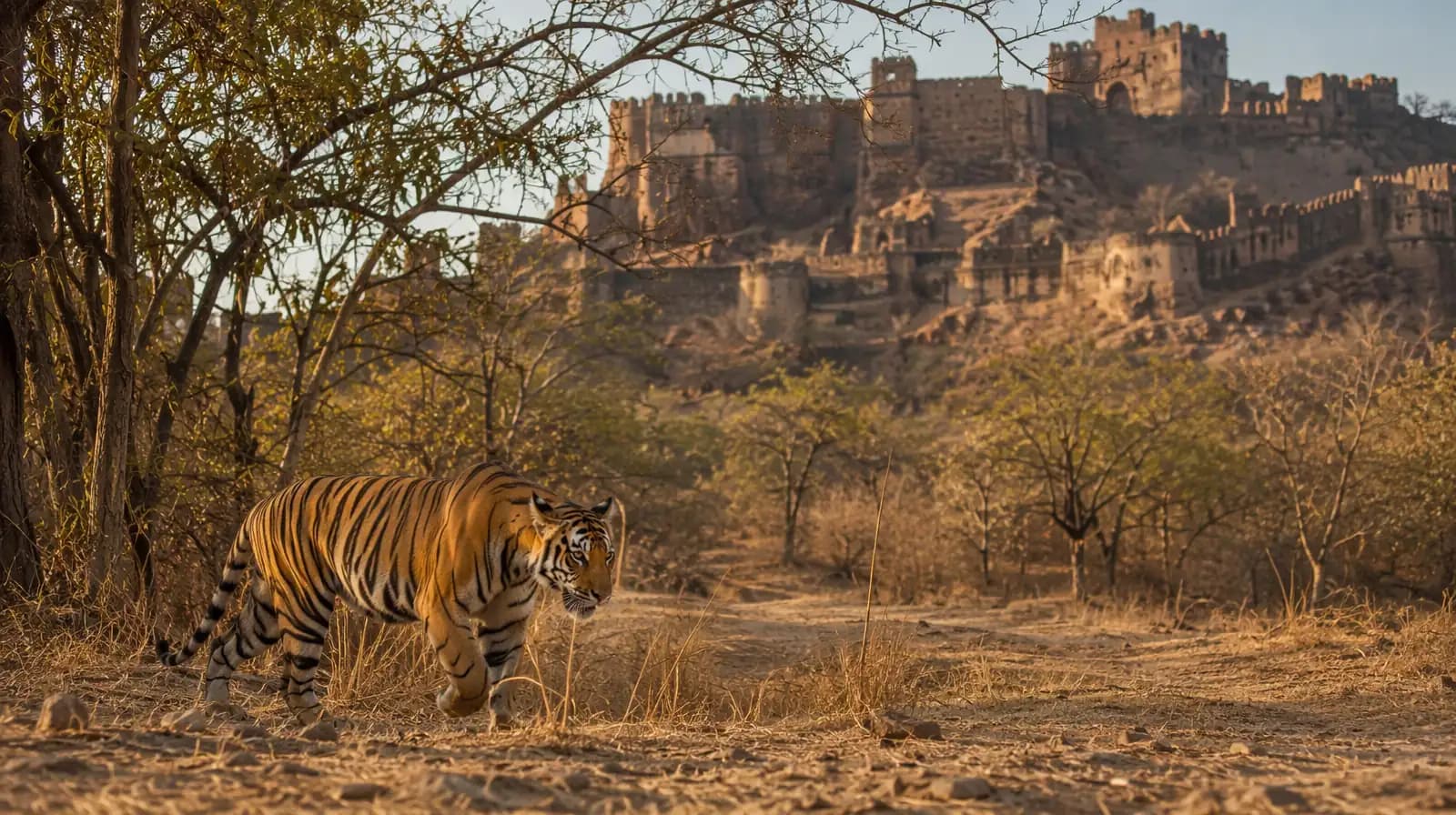
How Many Safari Zones Does Ranthambore Have?
Ranthambore’s tourism area is divided into 10 numbered safari zones. Zones 1–5 are generally described as the core tourism zones; Zones 6–10 are buffer zones. Your permit covers a particular date, shift, vehicle category and zone, rather than offering unlimited movement across the reserve.
This differs from the lodge-led system familiar to many African safari travellers. Booking accommodation near Ranthambore does not automatically secure the game drives you want. Permits are limited, and the practical choices—date, shift, vehicle and zone—need to fit together.
The zone system also spreads vehicles across different routes. It is not a simple league table of tiger habitat. Lakes, forest tracks, terrain and animal territories vary, while the tigers themselves move without regard to visitor preferences.
Ranthambore Zones at a Glance
Use this as a planning summary, not a sighting forecast. Current zone availability and the confirmed permit should guide the final decision.
Do not read “buffer” as “no tigers”, or “core” as a promise. Habitat quality, recent animal movement, guide judgement and chance all shape a drive. Several well-planned safaris give you a more balanced experience than staking the entire trip on one celebrated zone.
Prefer to coordinate Ranthambore within a wider itinerary? See the or ask about our private tour planning.
North India Grand Tour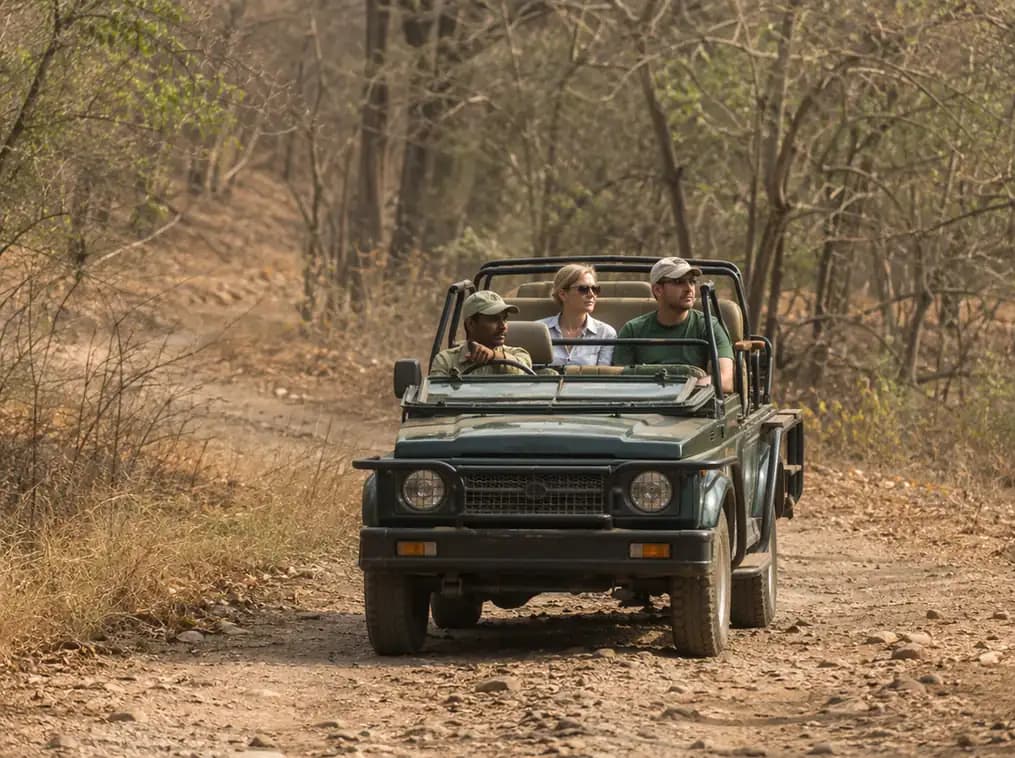
| Zone range | Type | Tiger-sighting likelihood | Notes |
|---|---|---|---|
| Zones 1–5 | Core tourism zones | Often considered higher, but never guaranteed | Established tiger territories, lakes and forest routes; usually the greatest permit demand |
| Zones 6–10 | Buffer zones | Variable; tiger sightings remain possible | Different landscapes and often a quieter experience; useful when core permits are limited |
Core and buffer zone characteristics for Ranthambore tiger safari planning.
Which Ranthambore Zone Has the Best Tiger Sightings?
Zones 1–5 are the usual first preference because of their established core-area reputation and well-known tiger territories. That makes them a reasonable starting point when searching for the best zone in Ranthambore for tigers—not a permanent ranking and certainly not a guarantee.
There is no single best zone every morning. A tiger may rest out of sight in a highly rated zone while another crosses a track in a buffer area. Recent movement can be useful context, but it is not a live animal-tracking promise. Ethical guides do not chase reported sightings across routes or crowd an animal for a better view.
Availability matters too. If your dates are fixed, a confirmed drive in an available zone is more useful than waiting for an idealised choice that may never open. Where possible, plan multiple drives and treat zone variety as part of the experience rather than a compromise.
Safari Timings by Season
Ranthambore operates two daily safari shifts: morning and evening. Each is approximately three and a half hours in the widely published schedule. Start and finish times move with daylight, so the exact reporting time on your permit matters more than a general timetable.
Indicative Seasonal Schedule
The following published pattern is useful when planning Ranthambore safari timings for 2026, but it is not a live Forest Department notice. Confirm current timings and zone availability directly before booking and again close to travel.
- 1–31 October: morning 6:30–10:00; evening 14:30–18:00.
- 1 November–31 January: morning 7:00–10:30; evening 14:00–17:30.
- 1 February–31 March: morning 6:30–10:00; evening 14:30–18:00.
- 1 April–15 May: morning 6:00–9:30; evening 15:00–18:30.
- 16 May–30 June: morning 6:00–9:30; evening 15:30–19:00.
Morning drives bring cooler temperatures and, in winter, atmospheric mist. Evening drives can offer warmer light and more comfortable conditions later in the hot season. Neither shift has a dependable daily advantage for tiger sightings. If your itinerary allows, include both rather than building expectations around one.
During the monsoon, access is more restricted: core zones generally close while selected buffer zones may operate subject to weather and Forest Department orders. Check the current position rather than assuming year-round access.
How to Book a Ranthambore Safari
For Ranthambore safari booking, aim for at least 30 days ahead where possible. Book earlier for October–April, weekends, holidays and private jeeps. Official booking windows can change, so confirm availability before committing to non-refundable flights or accommodation.
- 1Choose your dates and shift. Keep some flexibility and plan more than one drive if wildlife viewing is a priority. Check current morning and evening reporting times.
- 2Select a zone if the booking route allows. Submit a preference rather than assuming a zone is guaranteed. Final allocation depends on availability and current Forest Department rules.
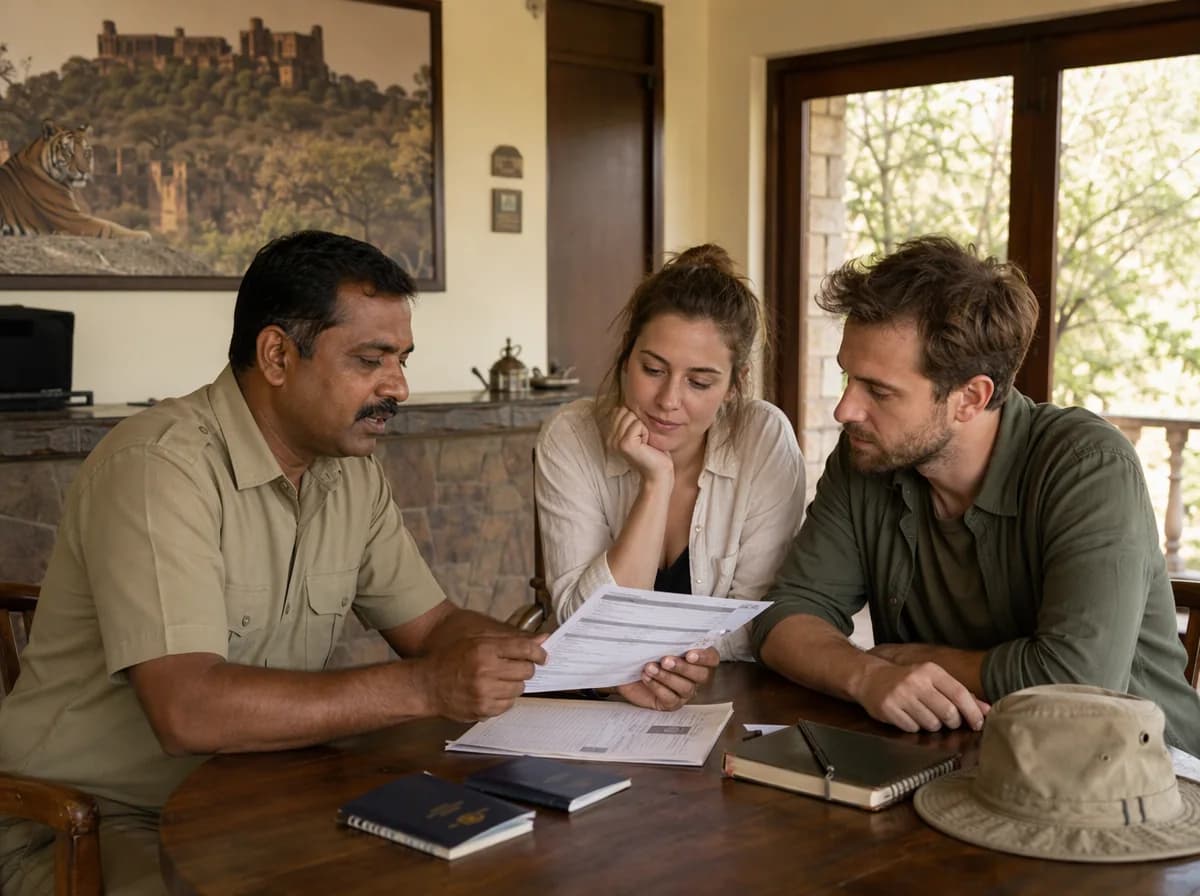
- 3Submit ID details for every traveller. Foreign nationals normally use passport details. Names and numbers must match the original identification carried to the gate.
- 4Pay and review the complete cost. Fees vary by vehicle, zone and nationality, and can be revised. Check what the quote covers—permit, vehicle, guide, taxes and transfers—and read the cancellation terms.
- 5Receive and verify the confirmation. Check date, shift, zone, vehicle and traveller details. Carry the permit and original ID, and follow the reporting instructions shown for your safari.
The Rajasthan Forest Department booking portal is the place to verify the current process. A private operator can coordinate these details with your lodges and transfers, reducing the risk of a permit that does not fit the rest of your itinerary.
What About Tatkal Permits?
A smaller tatkal quota may be released close to the safari date, usually at a higher price. Numbers and rules are limited and changeable. Treat it as a possible fallback, not the foundation of a long-haul holiday. Advance Ranthambore safari booking remains the sensible approach.
Jeep or Canter—Which Should You Choose?
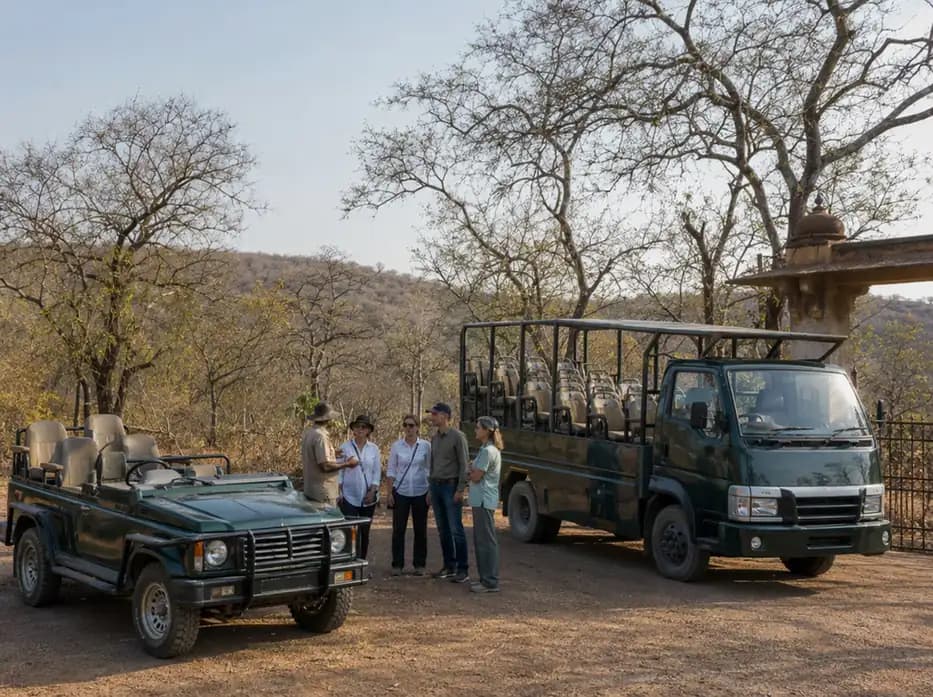
For a private trip, choose a jeep. A jeep, often called a Gypsy locally, is an open vehicle with up to six ticketed guest seats. Booking all available seats reserves it for your party. It offers more personal space, easier conversation with the naturalist and fewer competing photography positions. It does not permit off-route driving or closer wildlife encounters.
A canter is a larger open vehicle, generally carrying up to 20 passengers and sold per seat. Its elevated seating can provide a broad view, and it can be a practical lower-cost or larger-group option. The trade-off is a shared experience with less control over pace and viewing positions.
Jeep availability can be tighter, so book early. If only a canter is available, decide whether the lower price is worth the shared format rather than assuming the vehicles are equivalent. Our private wildlife tours use the vehicle choice that matches the experience promised in your written itinerary.
Frequently Asked Questions
Can I choose my safari zone in Ranthambore?
Sometimes. Some booking routes allow a zone preference subject to availability, while final allocation follows current Rajasthan Forest Department rules. Check the confirmed permit rather than assuming your request was accepted. An operator can manage the request and booking, but cannot guarantee a particular zone.
Is morning or evening safari better for tiger sightings?
Neither shift is reliably better every day. Morning drives offer cooler temperatures and early light; afternoon drives provide warmer late-day light. Tiger movement is unpredictable, so choose several drives across both shifts where possible rather than expecting one shift to guarantee a sighting.
What’s the difference between a jeep and canter safari?
A jeep is an open vehicle with up to six ticketed guest seats; booking all seats makes it private to your party. A canter is a larger, open shared vehicle, usually carrying up to 20 passengers and sold per seat. Choose a jeep for a private safari and a canter for a larger shared or lower-cost option.
How far ahead should I book Ranthambore?
Aim for at least 30 days ahead where possible, and earlier for October–April travel, weekends and private jeeps. The official booking window can change, so check current availability before finalising flights and hotels. Tatkal permits are limited, cost more and should be treated only as a possible fallback.

Surya Veloor Sundar
Partner & Lead Naturalist at Tentasy, wildlife photographer and naturalist with 12+ years of field experience across South Indian forests.
Meet the Tentasy team
Let us coordinate the zones and permits
On our North India Grand Tour, we handle zone selection and permit booking for every private guest, subject to official availability. We align your jeep, shifts, identification details and transfers, then explain exactly what is confirmed.